Saint-Guilhem-le-Désert
One of the Plus Beaux Villages de France, its abbey and the Pont du Diable.
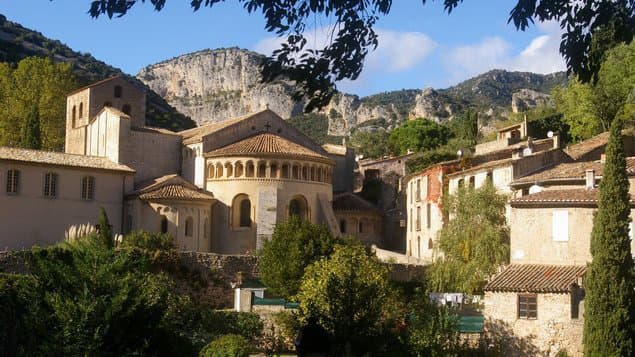
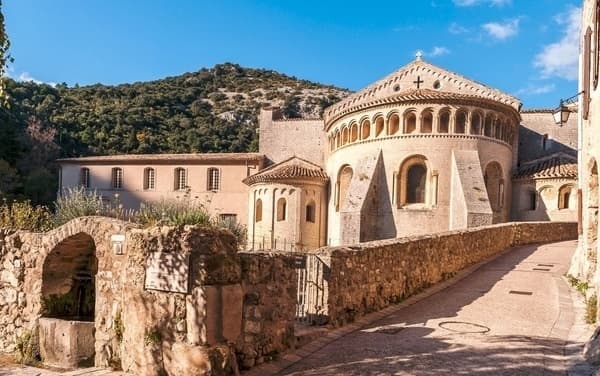
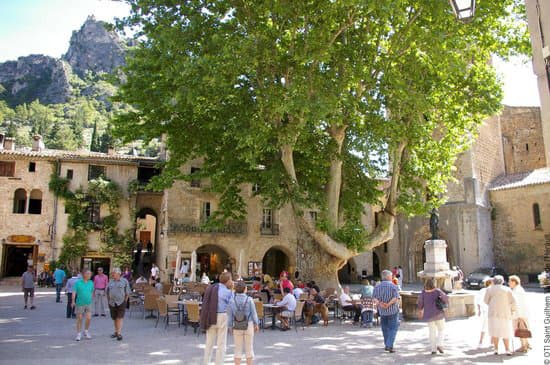
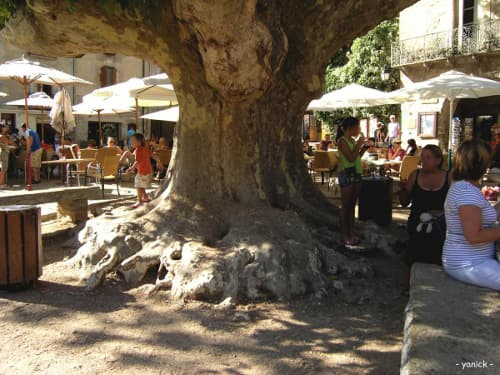
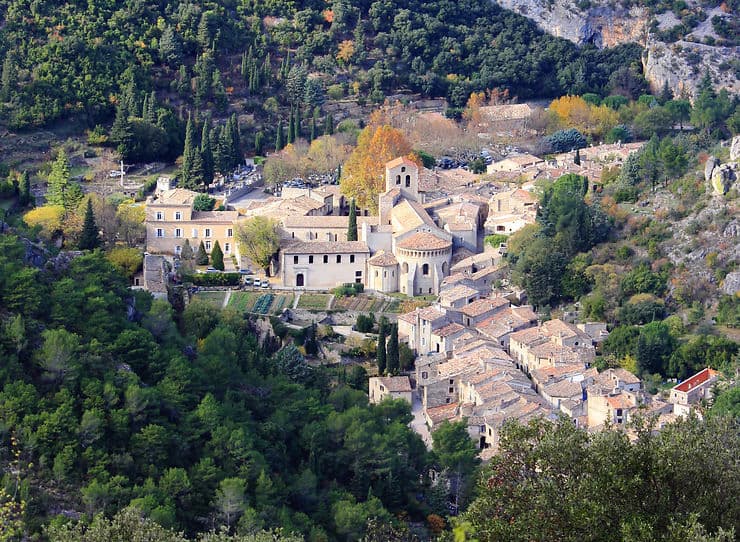
Saint-Guilhem-le-Désert is the village everyone will recommend, and for once the reputation is deserved. It sits at the head of a narrow valley, the val de Gellone, set back from the Hérault, and it has kept a remarkable architectural coherence: cobbled lanes, pale stone houses, and a central square shaded by an enormous plane tree.
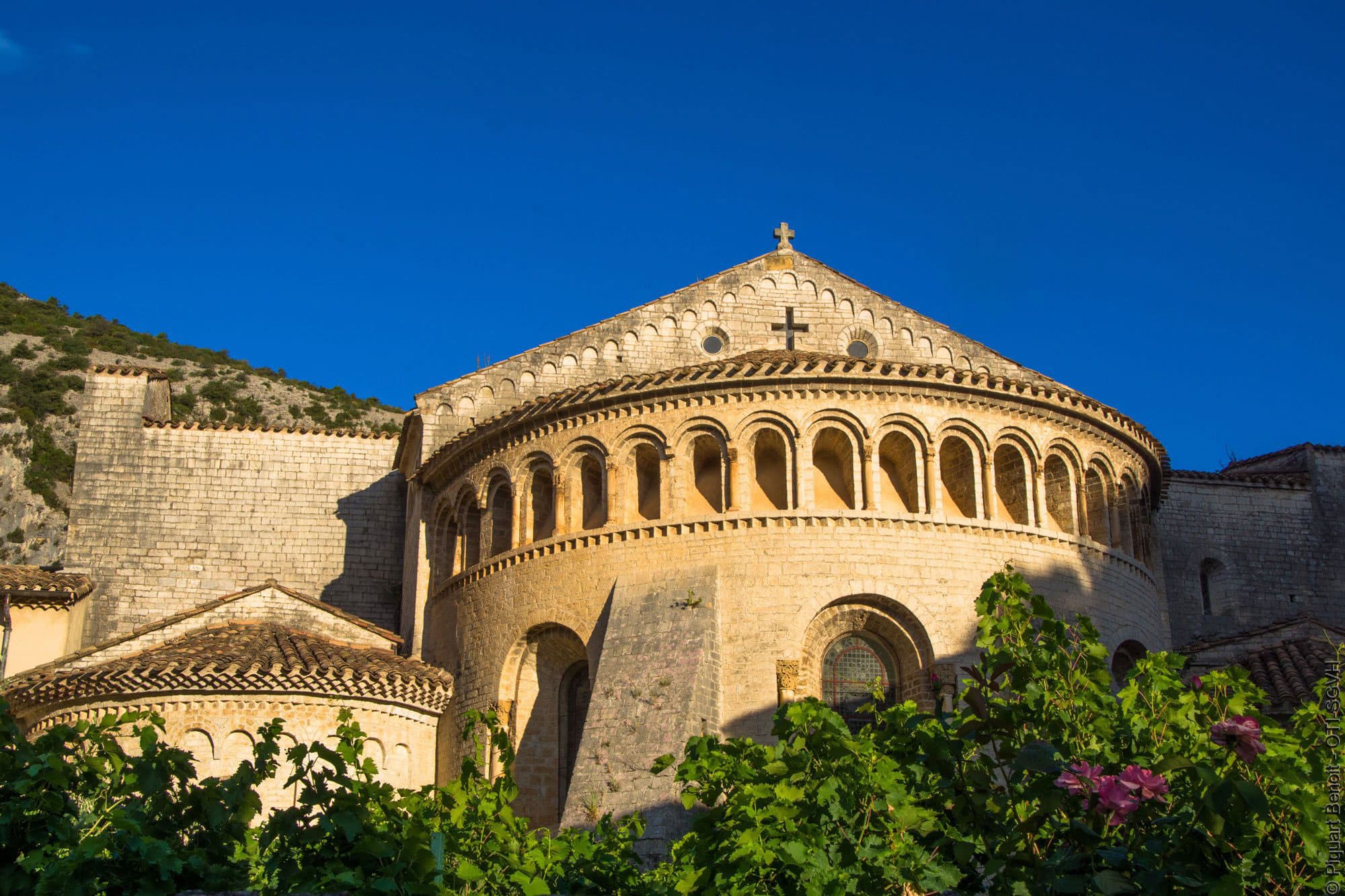
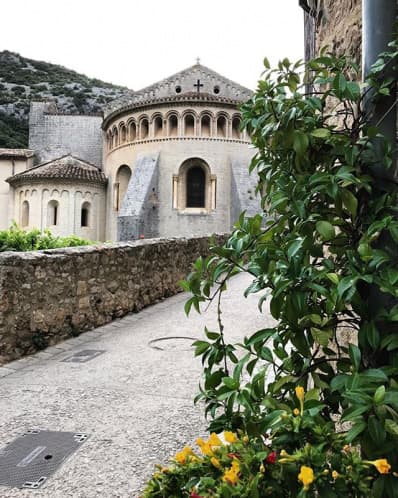
At its heart is the abbey of Gellone, founded in the early ninth century by Guilhem, a companion-in-arms of Charlemagne who retired there. The abbey church is a major landmark of Languedoc Romanesque, with a fine apse and a sharpness of proportion that strikes you on entering. It is inscribed on the UNESCO World Heritage list as part of the Routes of Santiago de Compostela in France, Saint-Guilhem being a historic stage on the via Tolosana.
A few kilometres downstream, the Pont du Diable crosses the Hérault where the gorges open out. It is one of the oldest medieval bridges in the region, built in the eleventh century by the monks of Gellone and Aniane, and carries the same UNESCO listing. Below it the Hérault widens into a large basin that is among the busiest swimming spots in the department, beautiful, but to be avoided mid-afternoon in August if you are after quiet.
For a group, the village is best visited late in the day: the low light on the stone is the finest moment, the cool returns to the lanes, and the day coaches have gone. Car parks are at the entrance to the village with a shuttle in high season; the centre is pedestrian and the lanes are not everywhere passable with a pushchair.
Plan to take in the Pont du Diable on the way, and perhaps the Clamouse cave, which is on the same road.